Spotlight
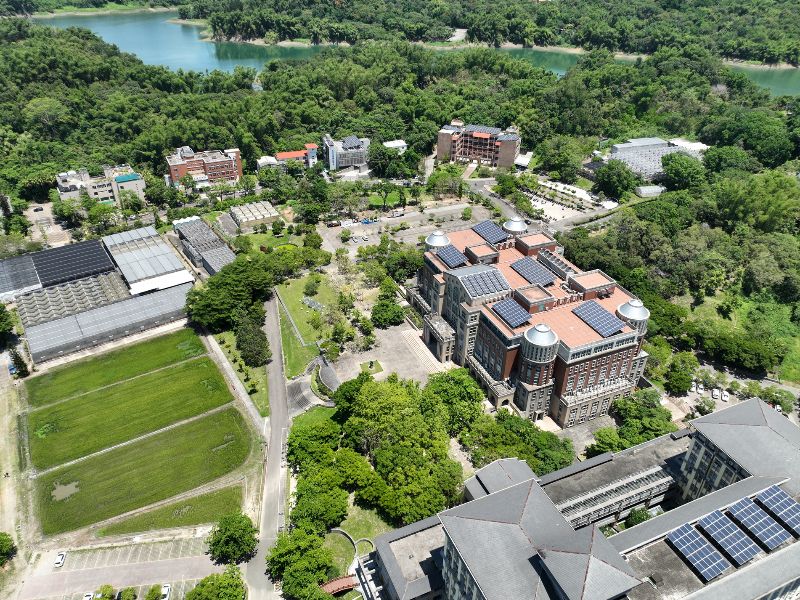
NCYU Advances Green University Initiative with Outstanding Energy-Saving Results: Annual Electricity Savings Exceed 1.6 Million kWh, Incentive Funding Tops All Universities
National Chiayi University (NCYU) has long been committed to promoting campus sustainability, energy conservation, and carbon reduction. Through a multifaceted approach spanning energy management, equipment upgrades, and energy-saving initiatives involving faculty and students, the university continues to enhance campus energy efficiency. In 2025, electricity consumption for teaching purposes decreased by 1,604,095 kWh compared with 2024, representing an energy-saving rate of 6.82%. These energy-saving achievements were recognized under the Ministry of Education’s (MOE) 2026 Tiered Electricity Subsidy Program for Colleges and Universities. NCYU received the “Incentive” designation along with an incentive award of NT$4,906,539, the highest amount granted among participating institutions. This recognition demonstrates the tangible results of NCYU’s efforts to promote a green campus. To achieve its energy conservation goals, NCYU’s Energy-Saving Initiative Committee regularly reviews campus energy use, identifies areas of high energy consumption, and develops improvement plans based on the specific needs of each facility. In recent years, the university has continued to replace aging and energy-intensive equipment, introduce LED lighting, upgrade air-conditioning systems, and strengthen energy management. By analyzing electricity use, planning improvements, and tracking implementation, NCYU has gradually established a systematic energy management framework, transforming energy conservation from isolated equipment upgrades into an integral part of daily campus governance. In recent years, NCYU has actively secured central government funding to support campus energy conservation and the transition toward net-zero emissions. From 2022 to 2026, NCYU received support through programs from the Water Resources Agency of the Ministry of Economic Affairs, the Ministry of Education, the Ministry of the Interior, the Administration of Commerce of the Ministry of Economic Affairs, the Ministry of Agriculture, and the Ministry of Environment. These programs span areas ranging from smart water management and rainwater harvesting to low-carbon campuses, building energy efficiency, energy-efficient air-conditioning systems, sustainable agriculture using green hydrogen and green oxygen, and zero-waste biomass circulation. Together, they lay an interdisciplinary foundation for a sustainable “Green University.” These energy-saving achievements are also reflected in improvements to NCYU’s energy mix. The share of green electricity used by NCYU increased from 6.6% in 2022 to 16.0% in 2023 and 19.5% in 2025. Through continued efforts in energy conservation, renewable energy generation, and smart energy management, NCYU continues to enhance its energy self-sufficiency and campus resilience. Looking ahead, NCYU plans to integrate microgrids with engineering technologies, smart energy, and AI applications while linking research across agriculture, forestry, environmental studies, and materials science. The university will incorporate achievements in smart energy, carbon sinks, natural resources, and circular economy into courses, student projects, internships, and talent development, shaping a distinctive interdisciplinary approach to teaching and research. NCYU President Han-Chien Lin noted that addressing climate change and advancing the energy transition is a social responsibility that universities must undertake in pursuing sustainable development. NCYU is advancing its “Green University” initiative through a long-term development blueprint for 2026 to 2045, structured around “energy efficiency as the foundation, resilient microgrids as the backbone, zero-waste biomass circulation as the core, and smart agriculture as the application.” Through coordinated and integrated development tailored to the distinctive features of its four campuses, NCYU aims to progress from an “energy-saving campus” to a “resilient campus,” before moving toward zero-waste circulation. In doing so, the university will draw on its strengths in agricultural education and research to support the regional transition toward net zero. Energy conservation and carbon reduction require long-term commitment and active participation from all faculty and students. NCYU will continue to refine electricity data analysis, smart monitoring, equipment upgrades, and energy conservation education, using this recognition as momentum for the campus energy transition. By building campus sustainability and resilience “one kilowatt-hour saved at a time,” NCYU is steadily moving toward its goal of becoming a low-carbon, green, smart, and resilient “Green University.” Photo 1: Solar power generation systems with a total installed capacity of 200.21 kWp. Photo 2: A total of 48 air-conditioning control units. Photo 3: Replacement of 12 cooling water pumps and chilled water pumps. Photo 4: On-site inspection of an air-conditioning equipment control panel.
2026.10.08
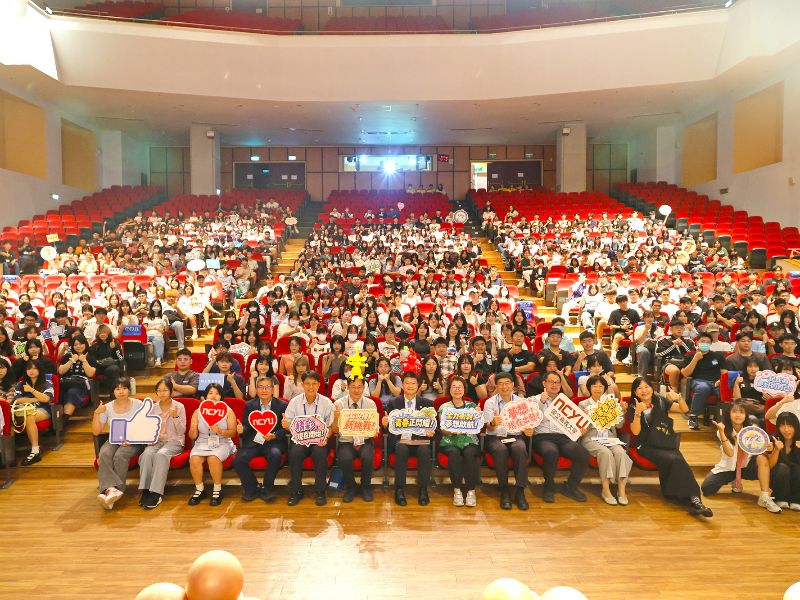
From Learning with Confidence to Teaching with Confidence: NCYU Enhances Support for Faculty and Students to Create a Happier Campus
National Chiayi University (NCYU) is fully prepared to welcome faculty and students to a new semester, providing comprehensive support spanning new student orientation, housing, course selection and coursework, and student club activities. It also supports faculty development in teaching and research, AI-enabled initiatives, and faculty advising, while continuing to improve dining, transportation, and public spaces. Guided by the needs of faculty and students, NCYU continues to integrate teaching, research, and campus life into a comprehensive support system that enables students to learn with confidence, faculty to teach with confidence, and the entire community to enjoy campus life with peace of mind. This approach gradually brings to life NCYU’s vision of a happy campus built on the principles of “putting students first” and “promoting the mutual well-being of faculty and students.” As NCYU welcomes approximately 3,000 new students, support begins on their very first day through new student orientation, campus safety education, and introductions to various learning resources, all designed to familiarize them with college life. The Office of Academic Affairs provides integrated information on registration, course selection, credit transfer, and online bridging courses. Through learning maps, curriculum maps, and career maps, it guides students to explore their interests, develop professional expertise, and gradually connect their learning with future careers. The university further promotes initiatives including “Discovering Chiayi,” “NCYU 10 CROSS,” “One International Feature for Each College and Department,” and “AI Plus Professional Expertise.” These initiatives take learning beyond the classroom and cultivate “NCYU Competencies,” encompassing core capabilities, adaptability, interdisciplinary competence, global vision, and lifelong learning capacity. Beyond the classroom, college life also provides an important setting for self-discovery and relationship building. Through the Student Club Expo, students can explore a wide range of student clubs, service-learning opportunities, campus activities, and interdisciplinary experiences, and are thus encouraged to discover their interests and connect with like-minded peers. For students facing difficulties, a support network is jointly established by faculty advisors, departments, student affairs teams, counselors, and administrative units, while measures such as the “Student Financial Support Program” help ease students’ financial burdens and ensure that every student receives the assistance they need. Strong support for faculty is essential for enabling students to learn with confidence. Before the semester started, NCYU organized a professional development workshop for new faculty members to familiarize them with the university’s research, teaching, and administrative resources. The workshop also fostered interdisciplinary exchange by offering opportunities to share experiences in research projects, journal submissions, and teaching. The new semester’s “Teaching and Learning Seminar” brought together more than 400 faculty members from across the university to explore applications of generative AI in research and teaching. Amid rapid changes in higher education, NCYU encourages faculty to evolve from knowledge providers into learning designers, facilitators of innovation, and mentors supporting students’ growth. Faculty support also extends to student counseling and advising. Professional development meetings for faculty advising teams begin with “faculty advisor self-care” and incorporate Social-Emotional Learning (SEL), interdisciplinary English as a Medium of Instruction (EMI) courses, and creative teaching aid design, along with discussions on student advising and daily life issues. These efforts aim to ensure that faculty do not face advising challenges alone but are backed by a comprehensive team of campus professionals. Beyond learning and teaching, NCYU continues to upgrade student dormitories and public spaces to enhance the everyday campus experience for faculty and students. In the new semester, Louisa Coffee opened on the Lantan campus, adding space for dining, reading, and social interaction. Student dormitories offer 24-hour smart vending services, while the network of YouBike stations continues to expand, connecting academic, residential, and everyday campus spaces. The outdoor “Lanting Plaza” at the Student Activity Center provides a new space for faculty and students to relax, interact, and hold events. From a dormitory bed, a course, and a student club to a bicycle ride and a cup of coffee, these everyday experiences make the campus not only a place for classes but also a community where faculty and students live and grow together. NCYU President Han-Chien Lin noted that, facing the challenges of declining birthrates, AI, and globalization, universities must go beyond “attracting students” to focus on “educating, retaining, and empowering students,” so that students can enjoy positive experiences in learning, campus life, and personal growth after enrolling at NCYU. At the same time, the university provides faculty with the resources needed for teaching, research, and student advising. NCYU will continue to translate care into action through the “NCYU Heart,” cultivate future-ready capabilities through “NCYU Competencies,” and foster a sense of belonging among faculty and students through the “NCYU Spirit.” The university will continue to advance toward its goal of becoming “a university students aspire to attend, where faculty achieve their potential, society places its trust, and the international community recognizes its excellence.” For the new semester, NCYU has prepared much more than a class schedule and a classroom. Rather, it has built a comprehensive support system spanning learning, teaching, research, and daily life, enabling students to explore their futures with confidence while allowing faculty to thrive in their teaching and research. Through shared learning, co-creation, and mutual well-being among faculty and students, NCYU strives to turn the vision of a happy campus into an everyday reality. Photo 1: NCYU President Han-Chien Lin encourages new students to boldly explore their futures. Photo 2: The new student orientation ceremony opens with performances by NCYU student clubs. Photo 3: Lanting Plaza on the Lantan campus brings together areas for relaxation and dining, creating a new, welcoming campus space. Photo 4: YouBike expands eco-friendly transportation options on campus. Photo 5: Dormitory rooms have been upgraded with new beds, desks, and storage facilities. Photo 6: NCYU freshmen embark on a new learning journey.
2026.10.08

NCYU Teacher Education Gets a Major Boost: MOE Supports 94 Additional Student Teacher Places for Academic Year 2026–2027, with Outstanding Results Leading the Way Nationwide
In response to the nationwide demand for teachers, National Chiayi University (NCYU) continues to build on its strengths in teacher education and expand its capacity to prepare high-quality teachers. NCYU is one of the few comprehensive universities in Taiwan that prepares teachers across all four major areas: elementary, secondary, preschool, and special education, with nearly 400 student teachers trained each year. With its half-century legacy in teacher education and high-quality instruction widely recognized, NCYU will add 94 student teacher places in academic year 2026–2027 with support from the Ministry of Education (MOE), expanding teacher preparation in elementary, secondary, and preschool special education to address teacher needs at different educational levels. NCYU’s teacher education programs have not only grown in scale but also demonstrated a balanced emphasis on quality and quantity through students’ teacher certification and employment outcomes. In 2026, 76.29% of NCYU’s graduating student teachers passed the Teacher Qualification Examination, exceeding the national pass rate of 55.89%. In teacher recruitment examinations, 164 candidates successfully secured full-time teaching positions, achieving outstanding results in examination areas including Taipei, New Taipei, Taichung, and Kaohsiung. Among them, eight ranked first in their respective examinations, demonstrating the professional competitiveness of NCYU student teachers as they enter the teaching profession. The additional 94 student teacher places for academic year 2026–2027 are primarily intended to meet staffing needs at different levels of education. The number of student teachers in elementary education will increase by 40, from 39 to 79, including 30 additional places in the master’s program of the Department of Education and 10 in the elementary teacher education program of the Department of Guidance and Counseling. To meet professional needs in early intervention and inclusive education, 40 places will be added in preschool special education. The secondary teacher education program will expand by 14 places, from 72 to 86, further strengthening the capacity to prepare subject teachers for junior and senior high schools. NCYU President Han-Chien Lin noted that universities bear an important responsibility to address national educational development and societal needs through teacher education. While the addition of 94 student teacher places reflects recognition of NCYU’s longstanding achievements in teacher education, its greater significance lies in addressing the current demand for high-quality teachers at all levels of education. Amid rapid changes in the educational landscape, including AI-enabled digital learning, bilingual education, and inclusive education, future teachers will need strong subject-matter and pedagogical expertise. They will also need skills in digital applications and interdisciplinary integration, along with an understanding of student diversity. NCYU will continue to draw on its comprehensive range of teacher education programs and its strengths as a comprehensive university to achieve simultaneous growth in capacity and quality. The university will also make full use of its additional capacity to train 94 student teachers in academic year 2026–2027, further strengthening professional coursework, educational practice, digital teaching, and support mechanisms for teacher recruitment examinations. While expanding the supply of high-quality teachers, NCYU will maintain the quality of its teacher preparation. The university will also encourage more outstanding students committed to careers in education to undergo comprehensive training and become a key force supporting the next generation of education in Taiwan. Fu-Hsing Tsai, Director of Teacher Education Center, said that the outstanding results in the Teacher Qualification Examination and teacher recruitment examinations stem from a long-established, comprehensive support system. In addition to providing high-quality professional coursework and faculty, NCYU has implemented a “dual-mentor system” to guide student teachers in their professional learning and career preparation. Each year, the university also organizes a “mock exam sandbox” for the written test, interview, and teaching demonstration required in teacher recruitment examinations. Drawing on the experience and expertise of distinguished alumni, students can familiarize themselves with actual exam settings and gain firsthand experience with the recruitment process before taking formal teacher recruitment examinations, helping bridge the gap between teacher preparation and classroom practice. Drawing on its longstanding expertise in teacher education, NCYU integrates diverse academic disciplines, teaching resources across multiple campuses, and practical settings such as its affiliated experimental elementary school and kindergarten. These resources provide student teachers with diverse learning opportunities spanning educational theory, teaching practice, and field observation. NCYU continues to prepare high-quality teachers equipped with professional expertise, dedication, and the competencies needed for the future of education in Taiwan. Photo 1: NCYU teacher education faculty and students learn together to prepare future professionals in preschool education. (Photo courtesy of the Department of Special Education) Photo 2: NCYU teacher education faculty and students deepen their practical learning through an off-campus educational visit. (Photo courtesy of the Department of Special Education) Photo 3: NCYU teacher education faculty and students visit the Assistive Technology Center at Daegu University. (Photo courtesy of the Department of Special Education) Photo 4: NCYU student teachers put the spirit of Albert Schweitzer into practice through sustained educational service in rural communities. (Photo courtesy of the Teacher Education Center) Photo 5: NCYU student teachers visit schools to support schoolchildren in diverse learning experiences. (Photo courtesy of the Teacher Education Center)
2026.10.01
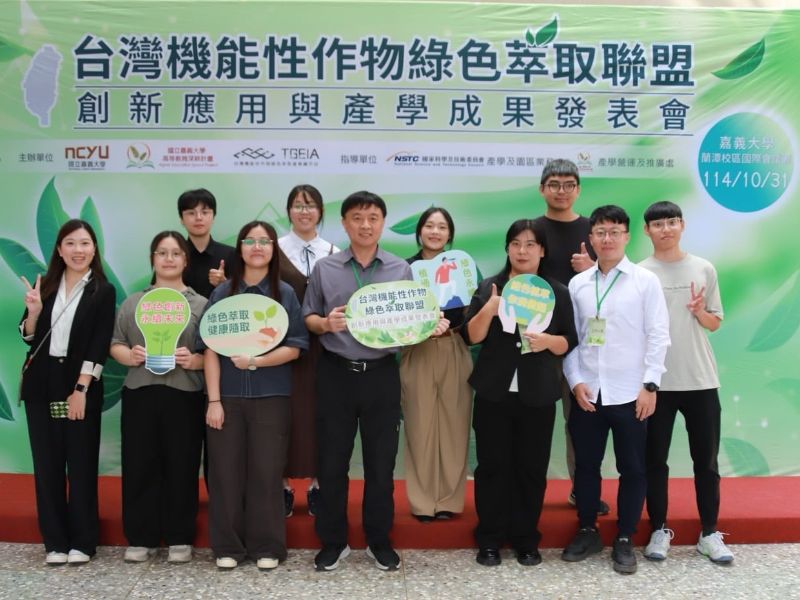
NCYU Partners with Yingfang Biotechnology as Phalaenopsis Nanovesicle Ingredient Receives International INCI Name
With support from the National Science and Technology Council’s Industry-Academia Alliance Program and the “Industry-Academia Linkage” initiative under Track C of the Ministry of Education’s Higher Education Sprout Project, National Chiayi University (NCYU) has integrated its research and development capabilities and industry-academia collaboration resources. The university has assisted Yingfang Biotechnology in developing a green, scalable production process and quality specifications for a nanovesicle ingredient derived from the roots of Taiwan-grown Phalaenopsis orchids. The ingredient recently completed the international cosmetic ingredient naming process and received the INCI name “Phalaenopsis sp. Root Vesicles,” facilitating subsequent ingredient identification, labeling, formulation development, and communication with global clients. This achievement marks an important milestone in NCYU’s efforts to commercialize and internationalize its research results. In this collaboration, NCYU integrated technologies involving botanical raw materials, biomimetic green extraction, the isolation and concentration of plant-derived extracellular vesicles, quality analysis, and product applications. This helped Yingfang Biotechnology develop the production process, establish quality specifications, and prepare the Phalaenopsis nanovesicle ingredient for commercialization. This work is gradually transforming laboratory research materials into high-value cosmetic ingredients with clearly defined sources, documented production processes, quality specifications, and application potential. At the core of the technology is a plant biomimetic green solvent developed by NCYU. Using naturally derived ingredients, the research team formulated an extraction system that closely mimics the physiological environment of plant cells. They also tailored the formulations to the characteristics of different plant tissues, bioactive compounds, and intended product applications, establishing a “one plant, one formulation” precision green extraction strategy. Plant exosome-like extracellular vesicles (EVs) are naturally occurring nanoscale vesicles released by plant cells, thus commonly referred to as “plant nanovesicles.” These vesicles are extremely small, with their structures readily affected by processing conditions. Maintaining their nanoscale characteristics and quality stability during isolation and concentration from plant materials and subsequent storage is therefore critical to moving the technology from research toward commercialization. The NCYU team introduced a biomimetic green solvent to provide a gentler extraction environment and combined it with low-temperature ultrasonication and patented membrane separation technology to release, isolate, and concentrate plant nanovesicles. Quality specifications were established based on particle size distribution, particle concentration, morphological observations, and compositional analysis. This technology aims not merely to “extract more,” but to “extract better.” Through a gentle process, the technology preserves the distinctive characteristics of botanical raw materials while transforming research materials into high-value ingredients suitable for consistent production, batch-to-batch quality control, and further product development. Prof. Cheng-Nan Chen of NCYU’s Department of Biochemical Science and Technology said that for plant nanovesicles to progress from research samples to industrial ingredients, several challenges must still be overcome, including susceptibility to processing conditions, batch-to-batch variation in raw materials, storage stability, and large-scale isolation. He emphasized that during conventional aqueous extraction, vesicles may rupture, aggregate, or undergo quality changes due to processing conditions. Biomimetic green solvents do much more than simply replace conventional extraction methods. They enable extraction environments to be tailored to the characteristics of different plants. This approach allows plant bioactive compounds to be extracted while preserving the quality characteristics of the nanovesicles as much as possible. Securing the INCI name marks a key milestone achieved by NCYU and its industry partner, spanning the process from botanical materials through green processing and quality analysis to international ingredient naming. This brings Taiwan’s plant nanovesicle technology closer to meeting the global cosmetics industry’s requirements for ingredient specifications and quality management. Angus Shih, Chairman of Yingfang Biotechnology, stated that global consumer demand continues to grow for premium ingredients that are naturally derived, sustainably processed, and backed by scientific specifications. With an INCI name now established for the Taiwan Phalaenopsis nanovesicle ingredient, subsequent ingredient labeling, formulation development, quality documentation, and collaboration with international clients will be facilitated. Moving forward, both parties will conduct further formulation compatibility testing and application validation for high-value skincare products. NCYU’s biomimetic green extraction technology features naturally derived components, gentle processing, and ingredient differentiation, allowing customized quality and compositional analysis data to be established according to specific plant and product requirements. For companies, this is no longer simply a conventional plant extract, but a premium ingredient with increasingly well-defined process specifications, quality documentation, and application potential, helping brands develop distinctive products and expand into global markets. NCYU President Han-Chien Lin noted that the university has long drawn on the Industry-Academia Alliance Program and the Higher Education Sprout Project to bridge campus research and development, corporate needs, and industry supply chains. These efforts help transform Taiwan’s distinctive plants from agricultural materials into biotech ingredients with defined quality specifications and market value. This achievement demonstrates that, beyond their ornamental and agricultural value, Phalaenopsis orchids can also be combined with plant nanovesicle, biomimetic green extraction, and materials analysis technologies to unlock high-value applications. Green processing and sustainable ingredients have become key areas of development in the global biotechnology and cosmetics industries. NCYU will continue to build on its interdisciplinary strengths in agriculture, biotechnology, process engineering, materials analysis, and industry-academia collaboration to help companies transform Taiwan’s distinctive plants into innovative ingredients that are sustainable, scientifically defined, and globally competitive. The two parties will continue to validate ingredient stability, batch-to-batch consistency, formulation compatibility, functionality and safety, while progressively refining ingredient specification sheets, batch test reports, and product application data. By expanding partnerships with international brands and pursuing long-term supply opportunities, the two parties will further develop an innovative plant nanovesicle model built on “Taiwanese plants, NCYU technology, green processing and commercialization.” Note: INCI names are primarily used for international identification and ingredient naming of cosmetic raw materials. Ingredient labeling, Chinese naming, and related product claims remain subject to the actual ingredients used and applicable regulations in each market. Photo 1: NCYU’s green extraction technology for plant nanovesicles. (Photo courtesy of Prof. Cheng-Nan Chen) Photo 2: Prof. Cheng-Nan Chen (center) of the Department of Biochemical Science and Technology presents a new product developed through the Industry-Academia Alliance Program. (Photo courtesy of Prof. Cheng-Nan Chen)
2026.09.03
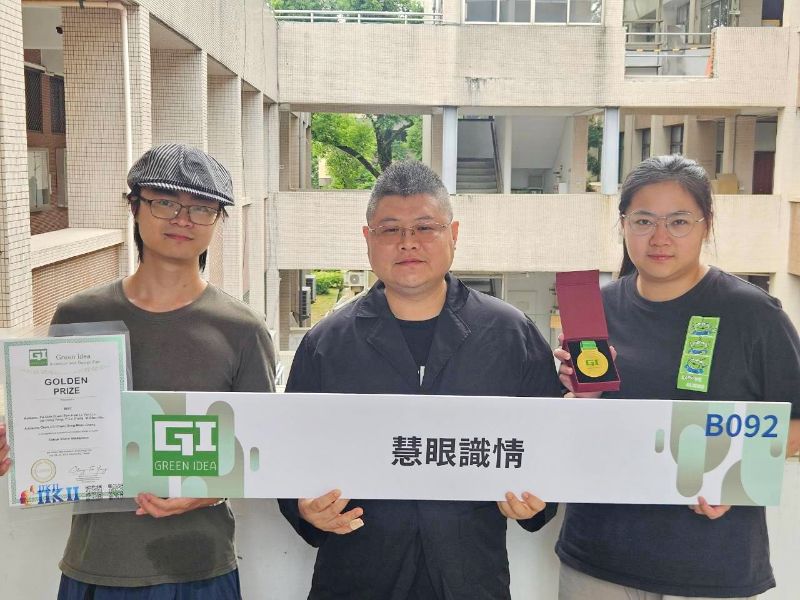
NCYU Department of Animal Science Wins Gold at International Invention Contest: AI Vision Boosts Smart Pig Farming
A team led by Assistant Prof. Chun-Chi Chen of the Department of Animal Science at National Chiayi University (NCYU), together with master’s and doctoral students Chen Po-Chia, Hsu Yi-Chen, and Chang Yi-Le, participated in the 8th Green Idea Invention and Design Fair with their project, “AI-Powered Estrus Detection,” and won the Gold Medal in the General Invention Division. The award highlights the innovative achievements of NCYU faculty and students in applying artificial intelligence technology to livestock management. Held at Cheng Shiu University (CSU), the competition was jointly organized by CSU and the International Innovation and Knowledge Invention Association. A total of 191 teams from eight countries and regions, including Taiwan, Hong Kong, South Korea, Singapore, Thailand, Vietnam, Cambodia, and Indonesia, competed in the event, showcasing 191 innovative projects. The competition featured three divisions: the General Invention Division, the Youth Invention Division, and the Design Division, covering a wide range of fields including artificial intelligence, smart healthcare, smart manufacturing, green energy, net-zero carbon emissions, and the circular economy. The event highlighted the strong momentum in innovation, research and development, and design across Asia. Among the entries, AI-related projects saw the most significant growth in number, encompassing technologies such as generative AI, intelligent image recognition, smart inspection, autonomous control, and intelligent decision-making systems. This reflects the growing importance of digital transformation and sustainable development guided by environmental, social, and governance principles in contemporary innovation, research, and development. Estrus detection in sows plays a critical role in swine reproduction, directly affecting breeding efficiency and overall reproductive productivity on pig farms. Currently, most conventional pig farms in Taiwan still rely on manual estrus detection, with experienced farm staff entering pig barns daily to observe each sow’s vulvar condition and behavioral signs. However, a single skilled worker can inspect only a limited number of sows each day. Large-scale pig farms housing around 10,000 pigs often require multiple dedicated workers, contributing to rising labor costs. In addition, manual inspections are limited to specific times of day, making round-the-clock monitoring difficult. Failure to identify the optimal breeding window may result in prolonged nonproductive periods and fewer litters per sow annually, ultimately affecting farm productivity. Assistant Prof. Chen stated that the “AI-Powered Estrus Detection” system incorporates AI-based image recognition technology and uses the YOLO object detection model to detect estrus in sows. The system enables farm personnel to monitor sow behavior and physiological signs in real time, improving the accuracy of breeding decisions and the efficiency of reproductive management. Further integration with smart monitoring, automated management, and data analytics systems could support the transition of pig farms toward smarter, less labor-intensive, and more digitalized farming. Such advances could drive further innovation and enhance productivity and sustainable competitiveness in Taiwan’s livestock industry. NCYU will continue to advance interdisciplinary research integrating artificial intelligence, smart agriculture, smart livestock farming, and biotechnology. The university will encourage faculty and students to address industry needs through innovative research and development, expand the use of AI technologies in livestock management, smart farming, and precision agriculture, foster industry-academia collaboration and technology transfer, and cultivate internationally competitive talent in science and technology. Construction has begun on the “Smart Pig House” at NCYU’s Animal Experiment Farm. The facility will feature smart technologies, environmental controls, and a strong focus on animal welfare, creating a highly biosecure, modern environment for swine production. Through this initiative, NCYU aims to contribute to the smart, digital, and sustainable development of Taiwan’s agriculture while fulfilling the university’s mission of social responsibility and industrial innovation. Photo 1: The NCYU Department of Animal Science team won the Gold Medal in the General Invention Division at the 8th Green Idea Invention and Design Fair, demonstrating its strong capabilities in innovative research and development in smart livestock farming. Photo 2: The Gold Medal certificate awarded to the “AI-Powered Estrus Detection” project in the General Invention Division at the 8th Green Idea Invention and Design Fair.
2026.09.03
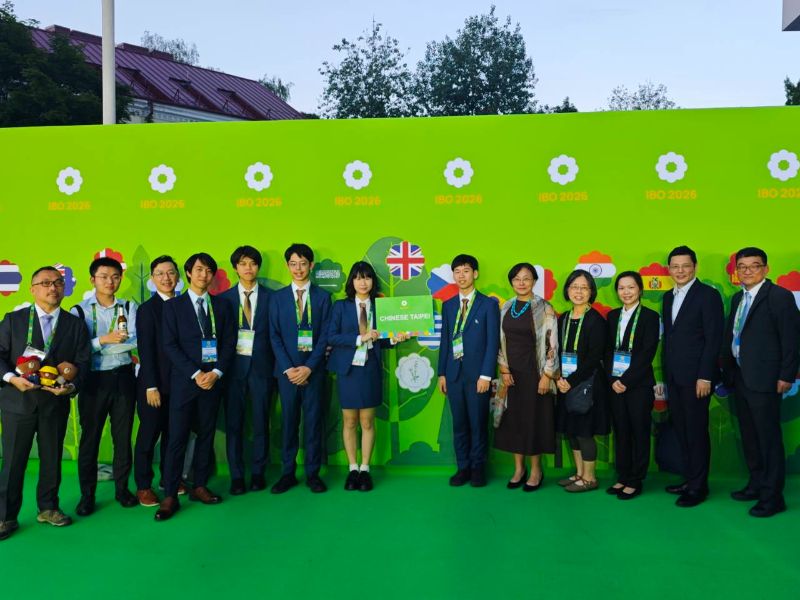
Taiwanese Students Win Four Gold Medals at the International Biology Olympiad, Topping the World; NCYU Professor Yi-Ling Yang Elected to the IBO Steering Committee
Taiwan’s science education community is celebrating remarkable news. The 37th International Biology Olympiad (IBO) concluded successfully in Lithuania. Taiwan’s national team stood out among 302 top competitors from 78 participating countries, winning four gold medals and ranking first in the world in the overall team standings. At this prestigious event, Prof. Yi-Ling Yang of National Chiayi University (NCYU) not only served as a member of Taiwan's mentoring team, helping the students win four gold medals, but was also elected to the IBO Steering Committee with the highest number of votes, earning strong support from representatives of 40 participating countries. Her election reflects strong international recognition of the academic excellence of both NCYU and Taiwan. NCYU President Han-Chien Lin extended his heartfelt congratulations, commending Prof. Yang for her long-standing dedication and outstanding contributions to biology education. He noted that NCYU is guided by its commitment to “interdisciplinary collaboration, innovative research, and social responsibility.” Prof. Yang’s election to the IBO Steering Committee with the highest number of votes, earning strong support from representatives of 40 participating countries, marks a significant milestone in her academic career. It also demonstrates NCYU’s outstanding achievements in advancing science education and internationalization while showcasing Taiwan’s academic strength on the global stage. Competition at this year’s Olympiad was exceptionally intense. With the guidance and support of Prof. Yang and the mentoring team, Taiwan’s four high school students rose to the challenge and delivered outstanding performances. Key highlights of this year’s competition include: 1. International Academic Recognition: Prof. Yi-Ling Yang of NCYU was elected to the IBO Steering Committee with the highest number of votes, earning strong support from representatives of 40 participating countries. 2. Professional Mentorship Contributes to Outstanding Achievement: As a member of Taiwan’s mentoring team, Prof. Yi-Ling Yang played a key role in reviewing competition questions, providing translations, and participating in score arbitration. With her dedicated support, Yao Yi-Geng, Chan Wei-Chun, Chen Yu-Chen, and Hsu Ting-Jui won four gold medals. They ranked 4th, 5th, 18th, and 19th individually, respectively, while Taiwan ranked first in the overall team standings among 78 participating countries. In recognition of the Taiwan team's outstanding performance, the Ministry of Education will award each gold medalist a scholarship of NT$200,000 and grant preferential admission benefits for further education. Prof. Yang stated that seeing Taiwanese students excel on the international stage made every effort worthwhile. NCYU will continue to leverage its academic influence to cultivate more interdisciplinary scientific talent with international competitiveness and a commitment to sustainable development. Photo 1. From left to right: Associate Prof. Shen-Horn Yen, Dr. Chung-Hsin Chen, Prof. Han-Jia Lin, Dr. Shih-Chi Huang, Yao Yi-Geng, Hsu Ting-Jui, Chen Yu-Chen, Chan Wei-Chun, Prof. Yi-Ling Yang, Associate Prof. Shu-Chuan Hsiao, Ms. Hui-Ju Huang, Distinguished Prof. Yu-Chung Chiang, and Associate Prof. Kuei-Shu Tung. Photo 2. From left to right: Taiwan team members Hsu Ting-Jui, Chan Wei-Chun, Yao Yi-Geng, and Chen Yu-Chen.
2026.07.29


