Spotlight
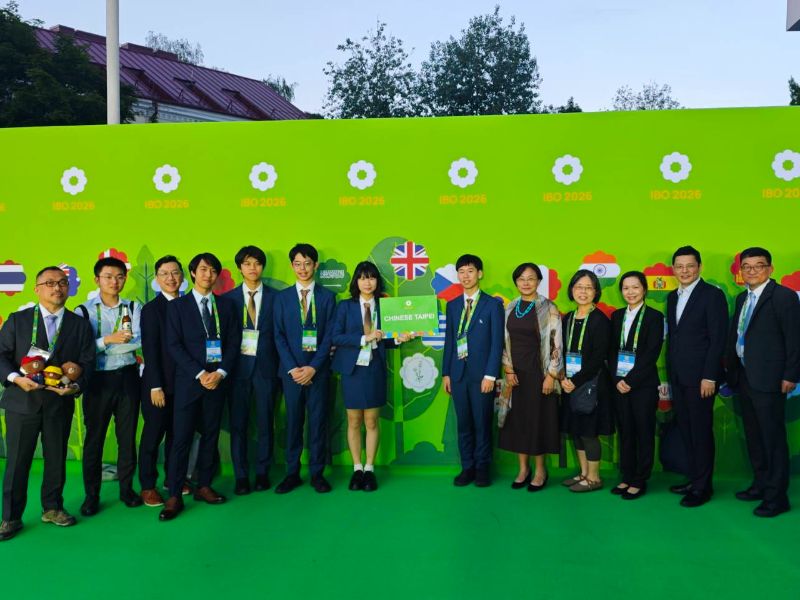
Taiwanese Students Win Four Gold Medals at the International Biology Olympiad, Topping the World; NCYU Professor Yi-Ling Yang Elected to the IBO Steering Committee
Taiwan’s science education community is celebrating remarkable news. The 37th International Biology Olympiad (IBO) concluded successfully in Lithuania. Taiwan’s national team stood out among 302 top competitors from 78 participating countries, winning four gold medals and ranking first in the world in the overall team standings. At this prestigious event, Prof. Yi-Ling Yang of National Chiayi University (NCYU) not only served as a member of Taiwan's mentoring team, helping the students win four gold medals, but was also elected to the IBO Steering Committee with the highest number of votes, earning strong support from representatives of 40 participating countries. Her election reflects strong international recognition of the academic excellence of both NCYU and Taiwan. NCYU President Han-Chien Lin extended his heartfelt congratulations, commending Prof. Yang for her long-standing dedication and outstanding contributions to biology education. He noted that NCYU is guided by its commitment to “interdisciplinary collaboration, innovative research, and social responsibility.” Prof. Yang’s election to the IBO Steering Committee with the highest number of votes, earning strong support from representatives of 40 participating countries, marks a significant milestone in her academic career. It also demonstrates NCYU’s outstanding achievements in advancing science education and internationalization while showcasing Taiwan’s academic strength on the global stage. Competition at this year’s Olympiad was exceptionally intense. With the guidance and support of Prof. Yang and the mentoring team, Taiwan’s four high school students rose to the challenge and delivered outstanding performances. Key highlights of this year’s competition include: 1. International Academic Recognition: Prof. Yi-Ling Yang of NCYU was elected to the IBO Steering Committee with the highest number of votes, earning strong support from representatives of 40 participating countries. 2. Professional Mentorship Contributes to Outstanding Achievement: As a member of Taiwan’s mentoring team, Prof. Yi-Ling Yang played a key role in reviewing competition questions, providing translations, and participating in score arbitration. With her dedicated support, Yao Yi-Geng, Chan Wei-Chun, Chen Yu-Chen, and Hsu Ting-Jui won four gold medals. They ranked 4th, 5th, 18th, and 19th individually, respectively, while Taiwan ranked first in the overall team standings among 78 participating countries. In recognition of the Taiwan team's outstanding performance, the Ministry of Education will award each gold medalist a scholarship of NT$200,000 and grant preferential admission benefits for further education. Prof. Yang stated that seeing Taiwanese students excel on the international stage made every effort worthwhile. NCYU will continue to leverage its academic influence to cultivate more interdisciplinary scientific talent with international competitiveness and a commitment to sustainable development. Photo 1. From left to right: Associate Prof. Shen-Horn Yen, Dr. Chung-Hsin Chen, Prof. Han-Jia Lin, Dr. Shih-Chi Huang, Yao Yi-Geng, Hsu Ting-Jui, Chen Yu-Chen, Chan Wei-Chun, Prof. Yi-Ling Yang, Associate Prof. Shu-Chuan Hsiao, Ms. Hui-Ju Huang, Distinguished Prof. Yu-Chung Chiang, and Associate Prof. Kuei-Shu Tung. Photo 2. From left to right: Taiwan team members Hsu Ting-Jui, Chan Wei-Chun, Yao Yi-Geng, and Chen Yu-Chen.
2026.07.29
Taiwanese Students Win Four Gold Medals at the International Biology Olympiad, Topping the World; NCYU Professor Yi-Ling Yang Elected to the IBO Steering Committee
Taiwan’s science education community is celebrating remarkable news. The 37th International Biology Olympiad (IBO) concluded successfully in Lithuania. Taiwan’s national team stood out among 302 top competitors from 78 participating countries, winning four gold medals and ranking first in the world in the overall team standings. At this prestigious event, Prof. Yi-Ling Yang of National Chiayi University (NCYU) not only served as a member of Taiwan's mentoring team, helping the students win four gold medals, but was also elected to the IBO Steering Committee with the highest number of votes, earning strong support from representatives of 40 participating countries. Her election reflects strong international recognition of the academic excellence of both NCYU and Taiwan. NCYU President Han-Chien Lin extended his heartfelt congratulations, commending Prof. Yang for her long-standing dedication and outstanding contributions to biology education. He noted that NCYU is guided by its commitment to “interdisciplinary collaboration, innovative research, and social responsibility.” Prof. Yang’s election to the IBO Steering Committee with the highest number of votes, earning strong support from representatives of 40 participating countries, marks a significant milestone in her academic career. It also demonstrates NCYU’s outstanding achievements in advancing science education and internationalization while showcasing Taiwan’s academic strength on the global stage. Competition at this year’s Olympiad was exceptionally intense. With the guidance and support of Prof. Yang and the mentoring team, Taiwan’s four high school students rose to the challenge and delivered outstanding performances. Key highlights of this year’s competition include: 1. International Academic Recognition: Prof. Yi-Ling Yang of NCYU was elected to the IBO Steering Committee with the highest number of votes, earning strong support from representatives of 40 participating countries. 2. Professional Mentorship Contributes to Outstanding Achievement: As a member of Taiwan’s mentoring team, Prof. Yi-Ling Yang played a key role in reviewing competition questions, providing translations, and participating in score arbitration. With her dedicated support, Yao Yi-Geng, Chan Wei-Chun, Chen Yu-Chen, and Hsu Ting-Jui won four gold medals. They ranked 4th, 5th, 18th, and 19th individually, respectively, while Taiwan ranked first in the overall team standings among 78 participating countries. In recognition of the Taiwan team's outstanding performance, the Ministry of Education will award each gold medalist a scholarship of NT$200,000 and grant preferential admission benefits for further education. Prof. Yang stated that seeing Taiwanese students excel on the international stage made every effort worthwhile. NCYU will continue to leverage its academic influence to cultivate more interdisciplinary scientific talent with international competitiveness and a commitment to sustainable development. Photo 1. From left to right: Associate Prof. Shen-Horn Yen, Dr. Chung-Hsin Chen, Prof. Han-Jia Lin, Dr. Shih-Chi Huang, Yao Yi-Geng, Hsu Ting-Jui, Chen Yu-Chen, Chan Wei-Chun, Prof. Yi-Ling Yang, Associate Prof. Shu-Chuan Hsiao, Ms. Hui-Ju Huang, Distinguished Prof. Yu-Chung Chiang, and Associate Prof. Kuei-Shu Tung. Photo 2. From left to right: Taiwan team members Hsu Ting-Jui, Chan Wei-Chun, Yao Yi-Geng, and Chen Yu-Chen.
2026.07.29
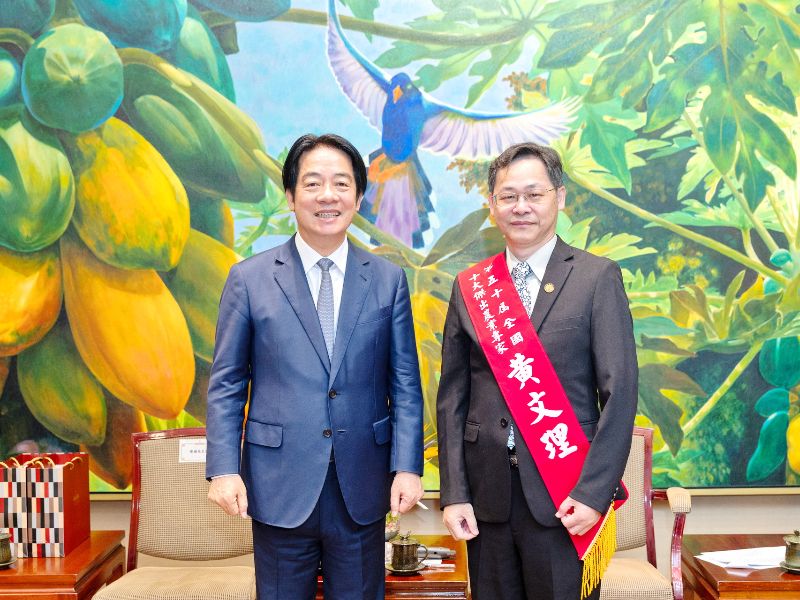
Twenty-Five Years of Dedication to Agronomy: NCYU Agronomy Professor Wen-Lii Huang Honored as One of the 50th National Top Ten Outstanding Agricultural Experts
Dr. Wen-Lii Huang, Professor in the Department of Agronomy and Dean of Student Affairs at National Chiayi University (NCYU), has long been dedicated to agricultural research, teaching, and industry-academia collaboration. He was recently honored as one of the 50th National Top Ten Outstanding Agricultural Experts in recognition of his contributions to agriculture. Over nearly 25 years of dedication to agricultural research and higher education, Prof. Huang has not only advanced research in plant stress physiology and molecular breeding, but has also translated research achievements into tangible value for industry, helping bring Taiwanese agronomy onto the international stage. Technological Breeding: The “NCYU-Tainan Series” of Rice Varieties Developed for Climate Resilience Facing climate change and the risk of water scarcity, Prof. Huang has always believed, “A breeder’s true stage will always be in the field.” In collaboration with the Tainan District Agricultural Research and Extension Station under the Ministry of Agriculture (MOA), Prof. Huang successfully developed Taiwan’s first batch of new rice varieties rigorously evaluated for drought tolerance and water conservation: “NCYU-Tainan No. 1” (Chia-Nan Zhenxiang), “NCYU-Tainan No. 2” (Chia-Nan Jingzhu), and “NCYU-Tainan Waxy No. 3” (Chia-Nan Nuobao). This achievement marked the first joint naming of new rice varieties by a university and an agricultural research and extension station in Taiwan, opening a new chapter in the nation’s rice breeding. Even with a 30% reduction in irrigation water, these rice varieties maintain stable yields and excellent eating quality. Among the three varieties, “NCYU-Tainan No. 1” features early maturity, a low glycemic index, and aromatic grain, offering exceptional eating quality. NCYU-Tainan No. 2 features plump grains and high yield potential, making it ideal for sake brewing. NCYU-Tainan Waxy No. 3 overcomes the traditional limitations of long cultivation periods and high water consumption in glutinous rice, becoming Taiwan’s first water-saving glutinous rice variety to be licensed for commercial cultivation. To date, these rice varieties have been licensed to five companies, generating NT$945,000 in licensing fees and industry value exceeding NT$80 million through commercial cultivation. Advancing Net Zero: Pioneering Low-Carbon Agriculture and Expanding Taiwan’s International Influence In response to the 2050 net-zero emissions target, Prof. Huang introduced Taiwan’s first Eddy Covariance Tower system for greenhouse gas measurement in rice fields, enabling precise carbon emissions inventories under different cultivation practices. Research findings show that the carbon footprint of packaged white rice produced from NCYU-Tainan No. 1 is only one-third that of comparable products, providing an empirical basis for low-carbon rice production in Taiwan. Internationally, Prof. Huang was elected Vice President of the Asian Crop Science Association (ACSA) and served as Chair of the Organizing Committee for the 11th Asian Crop Science Association Conference (ACSAC11) in 2025. The conference attracted more than 450 experts from 21 countries to Taiwan, significantly enhancing the global visibility of Taiwan’s agricultural research. Creating Value: From Crop Production to High-Value Agricultural Value Chains Prof. Huang firmly believes that “agriculture must go beyond production and develop value chains.” Guided by this philosophy, he has actively assisted licensed companies in developing a diverse range of high-value products, many of which are now available through leading retail channels such as MUJI. Among these products, “Crystal Pearl Beauty” Junmai Daiginjo, brewed from rice developed by NCYU, has received particular acclaim. It was selected as a premium product for the Taiwan Lantern Festival in Chiayi and won a Gold Award at the 2026 Kura Master Sake Competition in France, demonstrating to the international community the world-class quality of sake brewed from Taiwanese rice. In agricultural risk management, Prof. Huang also helped the Tea Experiment Station establish the “Compensation Standards for Agricultural Insurance Covering Cold Damage to Tea Plants.” The research established the scientific threshold for a 20% crop damage rate (the one-bud-one-leaf stage, exposure to 0°C for three consecutive hours), providing farmers with a fairer and more scientifically sound basis for agricultural insurance claims following natural disasters. Cultivating Talent: Nurturing Young Farmers and Fostering a Connection to the Land Beyond his contributions to research and industry, Prof. Huang has also shown great dedication to agricultural education. Prof. Huang previously served as Director of NCYU’s Professional Bachelor Program of Farm Management, a MOA-funded program. To date, the program has trained more than 500 young professional farmers, with over 90 percent of graduates choosing careers in agriculture. This has helped address the challenges of an aging agricultural workforce and labor shortages in Taiwan. He also helped establish Taiwan’s first Ministry of Labor-accredited “Class C Tea Processing Technician Skills Test Site” on the NCYU campus. He guides students toward earning national certifications and leads them into disaster-affected areas and Indigenous communities. Following Typhoon Morakot in 2009, he provided technical guidance for the restoration of native crops in Chashan Village, Chiayi. He later collaborated with the Forestry and Nature Conservation Agency to promote water-saving ecological rice cultivation in Taitung’s Duli Tribe. For Prof. Huang, the homegrown produce his students bring him is the greatest reward for nurturing talent. From studying in the Department of Agronomy at National Chiayi Institute of Agriculture to earning his bachelor’s degree at National Chung Hsing University and his doctorate in agronomy at National Taiwan University, Prof. Huang has remained true to the agronomist’s mission: “We feed the world.” Raised in a farming family, Prof. Huang has served as a technician at the Food Agency, a researcher at an agricultural research and extension station, Department Chair, Director of General Affairs, and Dean of Student Affairs. Throughout his distinguished career, he has maintained an unwavering passion for the land. He emphasizes, “New technologies can support precision breeding, but a breeder’s true stage will always be in the field.” Being named one of the 50th National Top Ten Outstanding Agricultural Experts is the strongest affirmation of his contributions to industry-academia collaboration over the past twenty-five years. Looking ahead, Prof. Huang will continue working alongside his research team and students to advance agronomy while remaining committed to the land and to the sustainable development of Taiwan’s agriculture. Photo 1. President Lai Ching-te meets with the recipients of the 50th National Top Ten Outstanding Agricultural Experts Award. Photo 2. Prof. Wen-Lii Huang is honored as one of the 50th National Top Ten Outstanding Agricultural Experts.
2026.07.29
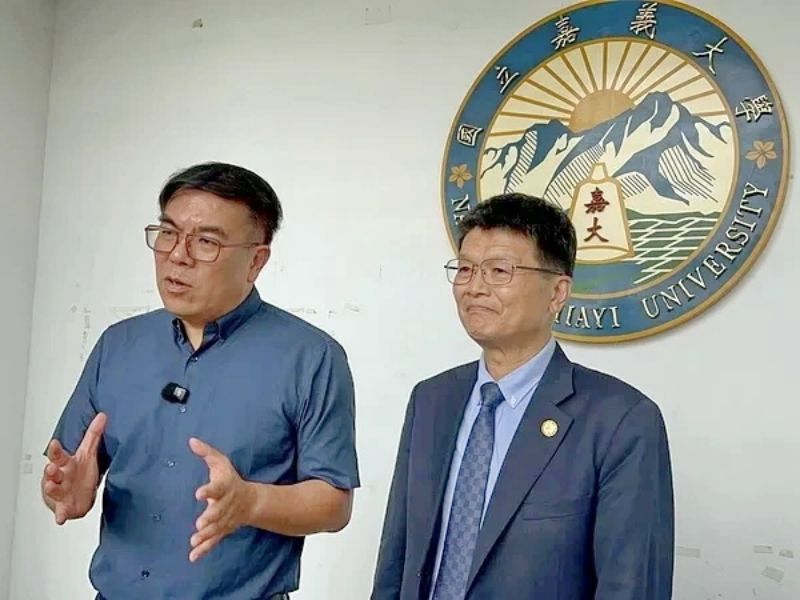
MOENV and NCYU Launch First Briefing on the National Land Green Canopy Climate Adaptation Plan, Kicking Off Six-Year National Land Cooling Strategy
To proactively address the challenges of global climate change and rising temperatures, the Ministry of Environment (MOENV) and National Chiayi University (NCYU) jointly launched the nation’s first “National Land Green Canopy Climate Adaptation Plan and Wood Resource Circularity Promotion Briefing.” According to the latest monitoring and analysis by the Research Center for Environmental Changes, Academia Sinica, the Chiayi region ranks among the areas with the highest heat stress risk in Taiwan. Therefore, the MOENV selected NCYU as the first stop in a nationwide series of 50 public engagement events, aiming to strengthen cross-domain cooperation and mitigate urban heat hotspots through urban greening and tree planting, thereby setting a new benchmark for Taiwan’s national land resilience. During the briefing, MOENV Minister Peng Chi-Ming noted that trees and urban forests provide the most natural and cost-effective way to reduce urban temperatures. He further emphasized that climate adaptation is a large-scale, systemic undertaking that requires the active involvement of local governments, academia, businesses, and the public. NCYU President Han-Chien Lin stated that, as a leading academic institution in the region, NCYU has long been committed to advancing cross-domain sustainable development and green research. He noted that NCYU was honored to partner with the MOENV in undertaking this important national mission and would continue to leverage its expertise to foster meaningful dialogue between the government and the public, working together to build a more resilient and sustainable national land. In response to the increasingly severe urban heat island effect, the MOENV plans to submit the six-year “National Land Green Canopy Climate Adaptation Plan” to the Executive Yuan by the end of this year. The plan will serve as the core blueprint for future national land cooling, disaster risk reduction, and urban resilience initiatives. The inaugural briefing held at NCYU not only focused on local heat challenges but also explored how to build a long-term green circular ecosystem, with discussions centered on putting greening policies into practice so they become part of everyday life. One of the key highlights of the briefing was the introduction of three practical strategies designed to reshape conventional approaches to greening through systematic and digital measures: 1. Address the imbalance between planting and maintenance: Adopt the right tree, right place approach while establishing professional, long-term maintenance mechanisms to ensure the sustainable growth of green assets. 2. Establish a nationwide tree adoption platform: Advance the “One Person, One Tree” initiative by integrating modern digital management tools that enable citizens and businesses to participate in, track, and maintain adopted trees. 3. Align with the Resource Circulation Promotion Act: Establish a rigorous classification and utilization system for wood resources to help develop a comprehensive green resource circulation system for the reuse of green waste. The event concluded successfully, showcasing NCYU’s longstanding strengths in environmental protection, University Social Responsibility (USR), and sustainability research. The university will continue to play a key role in cross-sector communication and technical support by integrating academic expertise with social resources to help gradually implement the national land green canopy policy and create a cooler, healthier, and safer ecological living environment for future generations. Photo 1: MOENV launched the nation’s first briefing on the National Land Green Canopy Climate Adaptation Plan at NCYU. Photo 2: MOENV Minister Peng Chi-Ming announced that Chiayi will serve as the starting point for 50 public engagement events across Taiwan and that a six-year national plan will be submitted by the end of the year to enhance national land resilience.
2026.07.29
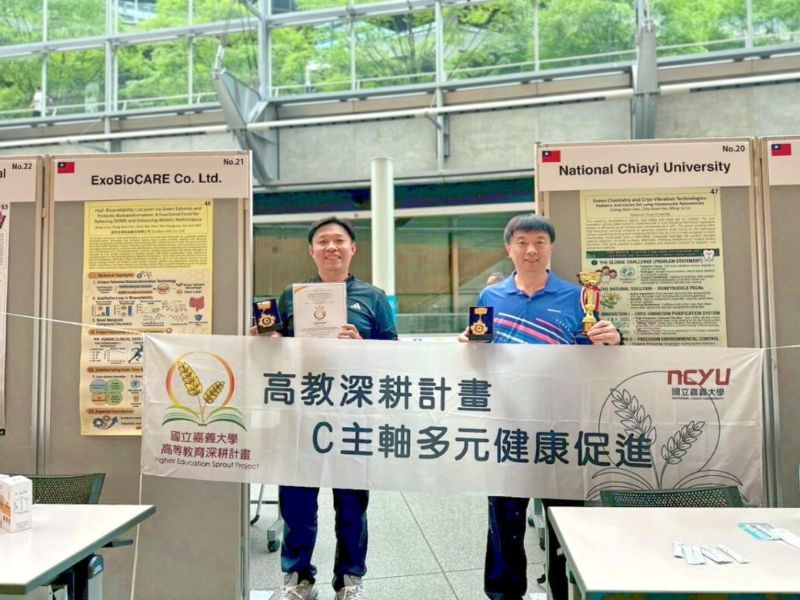
National Chiayi University (NCYU) Emerges as a Driving Force in Taiwan’s Biomedical Innovation
National Chiayi University (NCYU) is widely recognized for its rich agricultural heritage and its connection to the legendary KANO baseball team. Today, however, this century-old university in southern Taiwan is rapidly gaining international attention for a different reason: its groundbreaking research in smart agriculture, food biotechnology, medicinal plants, and plant-derived exosomes.
2026.07.08
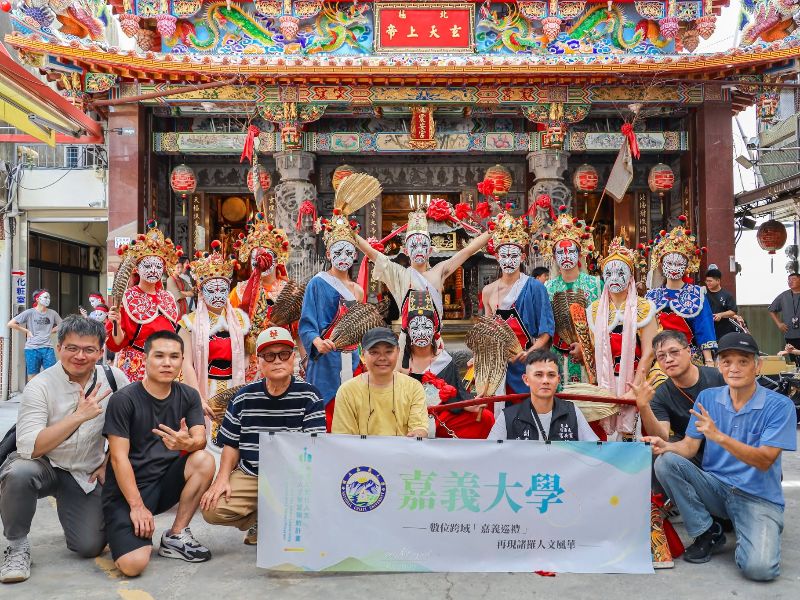
Traditional Folk Culture Meets Digital Innovation: NCYU's Ba Jia Jiang Course Reimagines a Timeless Tradition
The interdisciplinary general education course, “Guardian Generals Cultural Experience and Digital Exhibition,” is jointly offered by Associate Prof. Jian-Sheng Wu of the Department of Applied History, folklorist Tsung-Han Wen, and the teaching team. It provides students with an opportunity to gain an in-depth understanding of the historical development and cultural significance of the Jia Jiang (Guardian Generals) tradition. Students from various departments recently assumed the roles of Jia Jiang, embodying the majesty and solemnity of the tradition. Organized into three performance troupes, they took turns “marching out” through the streets of Chiayi, bringing traditional folk culture beyond the classroom and showcasing the remarkable outcomes of the course. Moving past their initial uncertainty at the start of the semester, the students continuously practiced every movement and formation, gradually developing strong teamwork and gaining a profound appreciation for the loyalty, righteousness, and discipline embodied in the Jia Jiang tradition. The final presentation took the form of a live street procession, traveling from Wenhua Road Night Market through the iconic Fountain Circle to Ruyi Zhenyu Hall of Chiayi Ciji Temple. The students' dignified movements and determined expressions deeply moved local residents and senior folk practitioners along the procession route. They praised the group not only for breaking conventions but also for bringing vibrant contemporary energy to this century-old folk tradition through their dedication and perseverance. The course was carefully planned by the project team of “Digital Interdisciplinary Chiayi Tour: Reviving the Cultural Heritage of Zhuluo,” led by Prof. Pei-Lun Lee of the Department of E-learning Design and Management, in collaboration with the General Education Center of the Office of Academic Affairs. Enrollment exceeded 250 students immediately after registration opened, with only 55 students admitted through a computerized lottery. Notably, over one-third of the enrolled students were female, significantly challenging the public stereotype that Jia Jiang culture is exclusively male-dominated. Their participation also demonstrates the growing openness and diverse cultural appeal of traditional folk performance among younger generations. The course invited a distinguished lineup of master practitioners, all recognized as important bearers of Taiwan's cultural heritage, from Ruyi Zhenyu Hall of Chiayi Ciji Temple and Zhenyou Hall of Zhen'an Temple to provide hands-on instruction. Sharing their expertise without reservation, the masters passed on the authentic traditions of Ba Jia Jiang, including facial makeup artistry, ritual choreography, footwork, and performance techniques, inspiring a new generation of students to embrace and preserve this rich folk tradition. The face-painting workshop also received invaluable support from the Shi Jia Jiang troupes of Huangyi Hall at Zhenbei Temple in Beishewei, Chiayi, and Jisheng Hall of Chiayi Chenghuang Temple. With their guidance, students were able to fully experience the profound heritage of Jia Jiang culture, from its cultural context and the symbolic meanings of its individual roles to hands-on practice. In addition to hands-on training in traditional folk arts, the course integrates digital technology into cultural learning and preservation. The teaching team invited Director Eric Lin to provide instruction in portrait photography, Associate Prof. Chih-Chieh Yang to introduce AI applications, and Lecturer Zun-Hsiu Chen and Project Researcher Po-Yang Lee to design digital 3D modeling courses. Through physical participation in Jia Jiang culture as well as video documentation, artificial intelligence, and digital 3D modeling, students explored how traditional folk culture can be interpreted in contemporary ways and preserved digitally, while expanding possibilities for the exhibition and transmission of intangible cultural heritage. As the first university in Taiwan to offer a general education course integrating Jia Jiang cultural experience, folk art practice, and digital exhibition applications, NCYU's teaching team will continue to offer the program. Through preservation and innovation, the program aims to sustain the vitality of Jia Jiang culture, marking a new milestone in its sustainable development. It also seeks to inspire more young people to engage with tradition, understand folk culture, and continue bringing new vitality to Taiwan's intangible cultural heritage. Photo 1. The Jia Jiang troupe and all instructors pose for a group photo in front of Zhen'an Temple in Chiayi. Photo 2. Members of the Jia Jiang troupe learn how to tie traditional straw sandals on the temple steps. Photo 3. The Jia Jiang troupe performs during a traditional street procession.
2026.07.08


