Spotlight
NCYU Partners with Yingfang Biotechnology as Phalaenopsis Nanovesicle Ingredient Receives International INCI Name
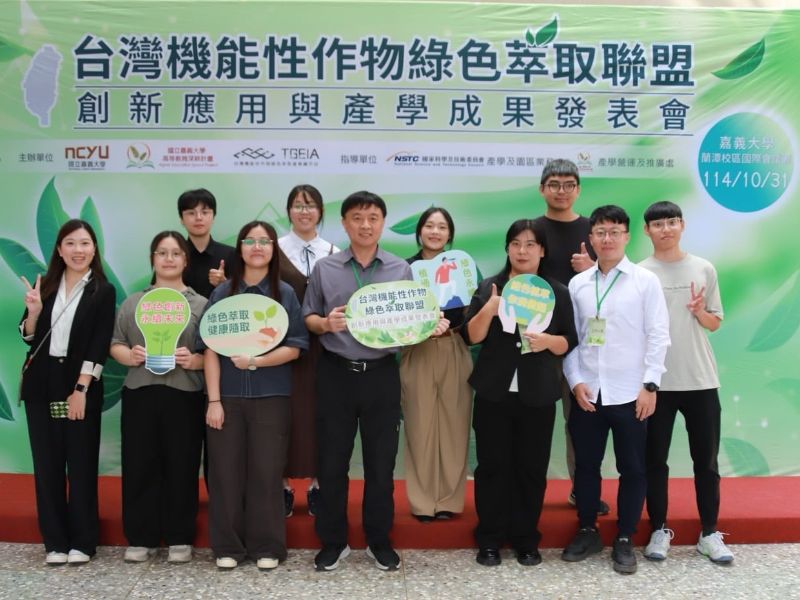
With support from the National Science and Technology Council’s Industry-Academia Alliance Program and the “Industry-Academia Linkage” initiative under Track C of the Ministry of Education’s Higher Education Sprout Project, National Chiayi University (NCYU) has integrated its research and development capabilities and industry-academia collaboration resources. The university has assisted Yingfang Biotechnology in developing a green, scalable production process and quality specifications for a nanovesicle ingredient derived from the roots of Taiwan-grown Phalaenopsis orchids. The ingredient recently completed the international cosmetic ingredient naming process and received the INCI name “Phalaenopsis sp. Root Vesicles,” facilitating subsequent ingredient identification, labeling, formulation development, and communication with global clients. This achievement marks an important milestone in NCYU’s efforts to commercialize and internationalize its research results. In this collaboration, NCYU integrated technologies involving botanical raw materials, biomimetic green extraction, the isolation and concentration of plant-derived extracellular vesicles, quality analysis, and product applications. This helped Yingfang Biotechnology develop the production process, establish quality specifications, and prepare the Phalaenopsis nanovesicle ingredient for commercialization. This work is gradually transforming laboratory research materials into high-value cosmetic ingredients with clearly defined sources, documented production processes, quality specifications, and application potential. At the core of the technology is a plant biomimetic green solvent developed by NCYU. Using naturally derived ingredients, the research team formulated an extraction system that closely mimics the physiological environment of plant cells. They also tailored the formulations to the characteristics of different plant tissues, bioactive compounds, and intended product applications, establishing a “one plant, one formulation” precision green extraction strategy. Plant exosome-like extracellular vesicles (EVs) are naturally occurring nanoscale vesicles released by plant cells, thus commonly referred to as “plant nanovesicles.” These vesicles are extremely small, with their structures readily affected by processing conditions. Maintaining their nanoscale characteristics and quality stability during isolation and concentration from plant materials and subsequent storage is therefore critical to moving the technology from research toward commercialization. The NCYU team introduced a biomimetic green solvent to provide a gentler extraction environment and combined it with low-temperature ultrasonication and patented membrane separation technology to release, isolate, and concentrate plant nanovesicles. Quality specifications were established based on particle size distribution, particle concentration, morphological observations, and compositional analysis. This technology aims not merely to “extract more,” but to “extract better.” Through a gentle process, the technology preserves the distinctive characteristics of botanical raw materials while transforming research materials into high-value ingredients suitable for consistent production, batch-to-batch quality control, and further product development. Prof. Cheng-Nan Chen of NCYU’s Department of Biochemical Science and Technology said that for plant nanovesicles to progress from research samples to industrial ingredients, several challenges must still be overcome, including susceptibility to processing conditions, batch-to-batch variation in raw materials, storage stability, and large-scale isolation. He emphasized that during conventional aqueous extraction, vesicles may rupture, aggregate, or undergo quality changes due to processing conditions. Biomimetic green solvents do much more than simply replace conventional extraction methods. They enable extraction environments to be tailored to the characteristics of different plants. This approach allows plant bioactive compounds to be extracted while preserving the quality characteristics of the nanovesicles as much as possible. Securing the INCI name marks a key milestone achieved by NCYU and its industry partner, spanning the process from botanical materials through green processing and quality analysis to international ingredient naming. This brings Taiwan’s plant nanovesicle technology closer to meeting the global cosmetics industry’s requirements for ingredient specifications and quality management. Angus Shih, Chairman of Yingfang Biotechnology, stated that global consumer demand continues to grow for premium ingredients that are naturally derived, sustainably processed, and backed by scientific specifications. With an INCI name now established for the Taiwan Phalaenopsis nanovesicle ingredient, subsequent ingredient labeling, formulation development, quality documentation, and collaboration with international clients will be facilitated. Moving forward, both parties will conduct further formulation compatibility testing and application validation for high-value skincare products. NCYU’s biomimetic green extraction technology features naturally derived components, gentle processing, and ingredient differentiation, allowing customized quality and compositional analysis data to be established according to specific plant and product requirements. For companies, this is no longer simply a conventional plant extract, but a premium ingredient with increasingly well-defined process specifications, quality documentation, and application potential, helping brands develop distinctive products and expand into global markets. NCYU President Han-Chien Lin noted that the university has long drawn on the Industry-Academia Alliance Program and the Higher Education Sprout Project to bridge campus research and development, corporate needs, and industry supply chains. These efforts help transform Taiwan’s distinctive plants from agricultural materials into biotech ingredients with defined quality specifications and market value. This achievement demonstrates that, beyond their ornamental and agricultural value, Phalaenopsis orchids can also be combined with plant nanovesicle, biomimetic green extraction, and materials analysis technologies to unlock high-value applications. Green processing and sustainable ingredients have become key areas of development in the global biotechnology and cosmetics industries. NCYU will continue to build on its interdisciplinary strengths in agriculture, biotechnology, process engineering, materials analysis, and industry-academia collaboration to help companies transform Taiwan’s distinctive plants into innovative ingredients that are sustainable, scientifically defined, and globally competitive. The two parties will continue to validate ingredient stability, batch-to-batch consistency, formulation compatibility, functionality and safety, while progressively refining ingredient specification sheets, batch test reports, and product application data. By expanding partnerships with international brands and pursuing long-term supply opportunities, the two parties will further develop an innovative plant nanovesicle model built on “Taiwanese plants, NCYU technology, green processing and commercialization.” Note: INCI names are primarily used for international identification and ingredient naming of cosmetic raw materials. Ingredient labeling, Chinese naming, and related product claims remain subject to the actual ingredients used and applicable regulations in each market. Photo 1: NCYU’s green extraction technology for plant nanovesicles. (Photo courtesy of Prof. Cheng-Nan Chen) Photo 2: Prof. Cheng-Nan Chen (center) of the Department of Biochemical Science and Technology presents a new product developed through the Industry-Academia Alliance Program. (Photo courtesy of Prof. Cheng-Nan Chen)
2026.09.03
NCYU Department of Animal Science Wins Gold at International Invention Contest: AI Vision Boosts Smart Pig Farming
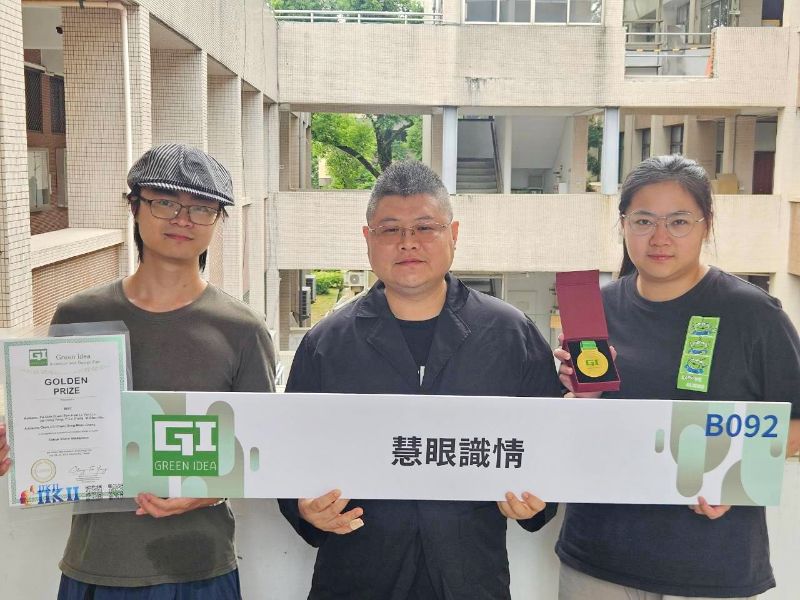
A team led by Assistant Prof. Chun-Chi Chen of the Department of Animal Science at National Chiayi University (NCYU), together with master’s and doctoral students Chen Po-Chia, Hsu Yi-Chen, and Chang Yi-Le, participated in the 8th Green Idea Invention and Design Fair with their project, “AI-Powered Estrus Detection,” and won the Gold Medal in the General Invention Division. The award highlights the innovative achievements of NCYU faculty and students in applying artificial intelligence technology to livestock management. Held at Cheng Shiu University (CSU), the competition was jointly organized by CSU and the International Innovation and Knowledge Invention Association. A total of 191 teams from eight countries and regions, including Taiwan, Hong Kong, South Korea, Singapore, Thailand, Vietnam, Cambodia, and Indonesia, competed in the event, showcasing 191 innovative projects. The competition featured three divisions: the General Invention Division, the Youth Invention Division, and the Design Division, covering a wide range of fields including artificial intelligence, smart healthcare, smart manufacturing, green energy, net-zero carbon emissions, and the circular economy. The event highlighted the strong momentum in innovation, research and development, and design across Asia. Among the entries, AI-related projects saw the most significant growth in number, encompassing technologies such as generative AI, intelligent image recognition, smart inspection, autonomous control, and intelligent decision-making systems. This reflects the growing importance of digital transformation and sustainable development guided by environmental, social, and governance principles in contemporary innovation, research, and development. Estrus detection in sows plays a critical role in swine reproduction, directly affecting breeding efficiency and overall reproductive productivity on pig farms. Currently, most conventional pig farms in Taiwan still rely on manual estrus detection, with experienced farm staff entering pig barns daily to observe each sow’s vulvar condition and behavioral signs. However, a single skilled worker can inspect only a limited number of sows each day. Large-scale pig farms housing around 10,000 pigs often require multiple dedicated workers, contributing to rising labor costs. In addition, manual inspections are limited to specific times of day, making round-the-clock monitoring difficult. Failure to identify the optimal breeding window may result in prolonged nonproductive periods and fewer litters per sow annually, ultimately affecting farm productivity. Assistant Prof. Chen stated that the “AI-Powered Estrus Detection” system incorporates AI-based image recognition technology and uses the YOLO object detection model to detect estrus in sows. The system enables farm personnel to monitor sow behavior and physiological signs in real time, improving the accuracy of breeding decisions and the efficiency of reproductive management. Further integration with smart monitoring, automated management, and data analytics systems could support the transition of pig farms toward smarter, less labor-intensive, and more digitalized farming. Such advances could drive further innovation and enhance productivity and sustainable competitiveness in Taiwan’s livestock industry. NCYU will continue to advance interdisciplinary research integrating artificial intelligence, smart agriculture, smart livestock farming, and biotechnology. The university will encourage faculty and students to address industry needs through innovative research and development, expand the use of AI technologies in livestock management, smart farming, and precision agriculture, foster industry-academia collaboration and technology transfer, and cultivate internationally competitive talent in science and technology. Construction has begun on the “Smart Pig House” at NCYU’s Animal Experiment Farm. The facility will feature smart technologies, environmental controls, and a strong focus on animal welfare, creating a highly biosecure, modern environment for swine production. Through this initiative, NCYU aims to contribute to the smart, digital, and sustainable development of Taiwan’s agriculture while fulfilling the university’s mission of social responsibility and industrial innovation. Photo 1: The NCYU Department of Animal Science team won the Gold Medal in the General Invention Division at the 8th Green Idea Invention and Design Fair, demonstrating its strong capabilities in innovative research and development in smart livestock farming. Photo 2: The Gold Medal certificate awarded to the “AI-Powered Estrus Detection” project in the General Invention Division at the 8th Green Idea Invention and Design Fair.
2026.09.03
Taiwanese Students Win Four Gold Medals at the International Biology Olympiad, Topping the World; NCYU Professor Yi-Ling Yang Elected to the IBO Steering Committee
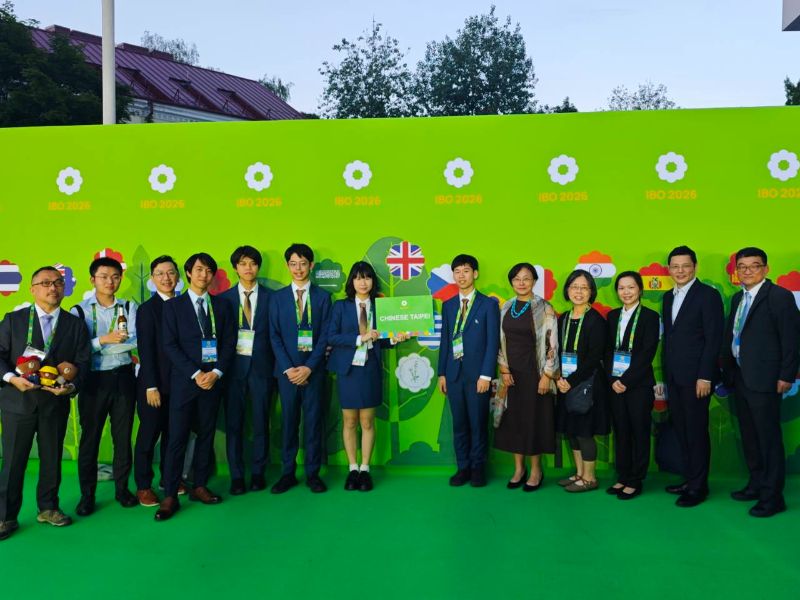
Taiwan’s science education community is celebrating remarkable news. The 37th International Biology Olympiad (IBO) concluded successfully in Lithuania. Taiwan’s national team stood out among 302 top competitors from 78 participating countries, winning four gold medals and ranking first in the world in the overall team standings. At this prestigious event, Prof. Yi-Ling Yang of National Chiayi University (NCYU) not only served as a member of Taiwan's mentoring team, helping the students win four gold medals, but was also elected to the IBO Steering Committee with the highest number of votes, earning strong support from representatives of 40 participating countries. Her election reflects strong international recognition of the academic excellence of both NCYU and Taiwan. NCYU President Han-Chien Lin extended his heartfelt congratulations, commending Prof. Yang for her long-standing dedication and outstanding contributions to biology education. He noted that NCYU is guided by its commitment to “interdisciplinary collaboration, innovative research, and social responsibility.” Prof. Yang’s election to the IBO Steering Committee with the highest number of votes, earning strong support from representatives of 40 participating countries, marks a significant milestone in her academic career. It also demonstrates NCYU’s outstanding achievements in advancing science education and internationalization while showcasing Taiwan’s academic strength on the global stage. Competition at this year’s Olympiad was exceptionally intense. With the guidance and support of Prof. Yang and the mentoring team, Taiwan’s four high school students rose to the challenge and delivered outstanding performances. Key highlights of this year’s competition include: 1. International Academic Recognition: Prof. Yi-Ling Yang of NCYU was elected to the IBO Steering Committee with the highest number of votes, earning strong support from representatives of 40 participating countries. 2. Professional Mentorship Contributes to Outstanding Achievement: As a member of Taiwan’s mentoring team, Prof. Yi-Ling Yang played a key role in reviewing competition questions, providing translations, and participating in score arbitration. With her dedicated support, Yao Yi-Geng, Chan Wei-Chun, Chen Yu-Chen, and Hsu Ting-Jui won four gold medals. They ranked 4th, 5th, 18th, and 19th individually, respectively, while Taiwan ranked first in the overall team standings among 78 participating countries. In recognition of the Taiwan team's outstanding performance, the Ministry of Education will award each gold medalist a scholarship of NT$200,000 and grant preferential admission benefits for further education. Prof. Yang stated that seeing Taiwanese students excel on the international stage made every effort worthwhile. NCYU will continue to leverage its academic influence to cultivate more interdisciplinary scientific talent with international competitiveness and a commitment to sustainable development. Photo 1. From left to right: Associate Prof. Shen-Horn Yen, Dr. Chung-Hsin Chen, Prof. Han-Jia Lin, Dr. Shih-Chi Huang, Yao Yi-Geng, Hsu Ting-Jui, Chen Yu-Chen, Chan Wei-Chun, Prof. Yi-Ling Yang, Associate Prof. Shu-Chuan Hsiao, Ms. Hui-Ju Huang, Distinguished Prof. Yu-Chung Chiang, and Associate Prof. Kuei-Shu Tung. Photo 2. From left to right: Taiwan team members Hsu Ting-Jui, Chan Wei-Chun, Yao Yi-Geng, and Chen Yu-Chen.
2026.07.29
Twenty-Five Years of Dedication to Agronomy: NCYU Agronomy Professor Wen-Lii Huang Honored as One of the 50th National Top Ten Outstanding Agricultural Experts
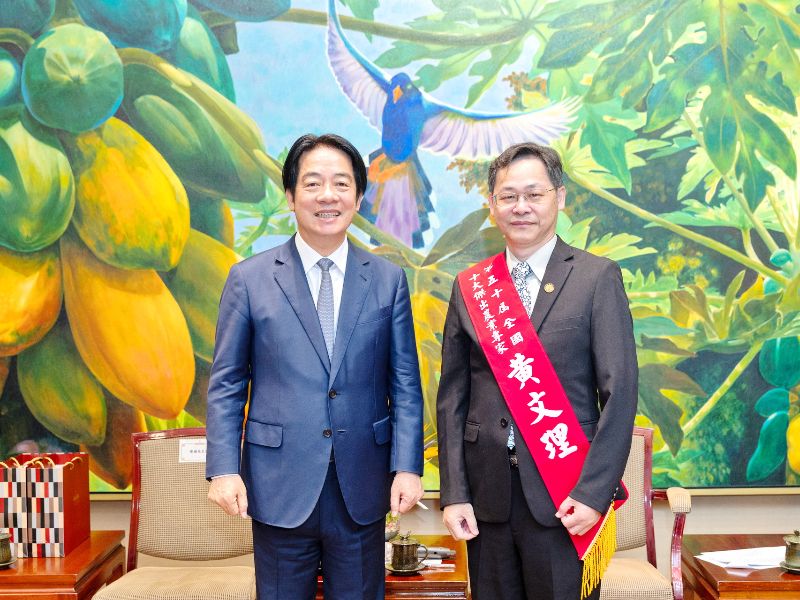
Dr. Wen-Lii Huang, Professor in the Department of Agronomy and Dean of Student Affairs at National Chiayi University (NCYU), has long been dedicated to agricultural research, teaching, and industry-academia collaboration. He was recently honored as one of the 50th National Top Ten Outstanding Agricultural Experts in recognition of his contributions to agriculture. Over nearly 25 years of dedication to agricultural research and higher education, Prof. Huang has not only advanced research in plant stress physiology and molecular breeding, but has also translated research achievements into tangible value for industry, helping bring Taiwanese agronomy onto the international stage. Technological Breeding: The “NCYU-Tainan Series” of Rice Varieties Developed for Climate Resilience Facing climate change and the risk of water scarcity, Prof. Huang has always believed, “A breeder’s true stage will always be in the field.” In collaboration with the Tainan District Agricultural Research and Extension Station under the Ministry of Agriculture (MOA), Prof. Huang successfully developed Taiwan’s first batch of new rice varieties rigorously evaluated for drought tolerance and water conservation: “NCYU-Tainan No. 1” (Chia-Nan Zhenxiang), “NCYU-Tainan No. 2” (Chia-Nan Jingzhu), and “NCYU-Tainan Waxy No. 3” (Chia-Nan Nuobao). This achievement marked the first joint naming of new rice varieties by a university and an agricultural research and extension station in Taiwan, opening a new chapter in the nation’s rice breeding. Even with a 30% reduction in irrigation water, these rice varieties maintain stable yields and excellent eating quality. Among the three varieties, “NCYU-Tainan No. 1” features early maturity, a low glycemic index, and aromatic grain, offering exceptional eating quality. NCYU-Tainan No. 2 features plump grains and high yield potential, making it ideal for sake brewing. NCYU-Tainan Waxy No. 3 overcomes the traditional limitations of long cultivation periods and high water consumption in glutinous rice, becoming Taiwan’s first water-saving glutinous rice variety to be licensed for commercial cultivation. To date, these rice varieties have been licensed to five companies, generating NT$945,000 in licensing fees and industry value exceeding NT$80 million through commercial cultivation. Advancing Net Zero: Pioneering Low-Carbon Agriculture and Expanding Taiwan’s International Influence In response to the 2050 net-zero emissions target, Prof. Huang introduced Taiwan’s first Eddy Covariance Tower system for greenhouse gas measurement in rice fields, enabling precise carbon emissions inventories under different cultivation practices. Research findings show that the carbon footprint of packaged white rice produced from NCYU-Tainan No. 1 is only one-third that of comparable products, providing an empirical basis for low-carbon rice production in Taiwan. Internationally, Prof. Huang was elected Vice President of the Asian Crop Science Association (ACSA) and served as Chair of the Organizing Committee for the 11th Asian Crop Science Association Conference (ACSAC11) in 2025. The conference attracted more than 450 experts from 21 countries to Taiwan, significantly enhancing the global visibility of Taiwan’s agricultural research. Creating Value: From Crop Production to High-Value Agricultural Value Chains Prof. Huang firmly believes that “agriculture must go beyond production and develop value chains.” Guided by this philosophy, he has actively assisted licensed companies in developing a diverse range of high-value products, many of which are now available through leading retail channels such as MUJI. Among these products, “Crystal Pearl Beauty” Junmai Daiginjo, brewed from rice developed by NCYU, has received particular acclaim. It was selected as a premium product for the Taiwan Lantern Festival in Chiayi and won a Gold Award at the 2026 Kura Master Sake Competition in France, demonstrating to the international community the world-class quality of sake brewed from Taiwanese rice. In agricultural risk management, Prof. Huang also helped the Tea Experiment Station establish the “Compensation Standards for Agricultural Insurance Covering Cold Damage to Tea Plants.” The research established the scientific threshold for a 20% crop damage rate (the one-bud-one-leaf stage, exposure to 0°C for three consecutive hours), providing farmers with a fairer and more scientifically sound basis for agricultural insurance claims following natural disasters. Cultivating Talent: Nurturing Young Farmers and Fostering a Connection to the Land Beyond his contributions to research and industry, Prof. Huang has also shown great dedication to agricultural education. Prof. Huang previously served as Director of NCYU’s Professional Bachelor Program of Farm Management, a MOA-funded program. To date, the program has trained more than 500 young professional farmers, with over 90 percent of graduates choosing careers in agriculture. This has helped address the challenges of an aging agricultural workforce and labor shortages in Taiwan. He also helped establish Taiwan’s first Ministry of Labor-accredited “Class C Tea Processing Technician Skills Test Site” on the NCYU campus. He guides students toward earning national certifications and leads them into disaster-affected areas and Indigenous communities. Following Typhoon Morakot in 2009, he provided technical guidance for the restoration of native crops in Chashan Village, Chiayi. He later collaborated with the Forestry and Nature Conservation Agency to promote water-saving ecological rice cultivation in Taitung’s Duli Tribe. For Prof. Huang, the homegrown produce his students bring him is the greatest reward for nurturing talent. From studying in the Department of Agronomy at National Chiayi Institute of Agriculture to earning his bachelor’s degree at National Chung Hsing University and his doctorate in agronomy at National Taiwan University, Prof. Huang has remained true to the agronomist’s mission: “We feed the world.” Raised in a farming family, Prof. Huang has served as a technician at the Food Agency, a researcher at an agricultural research and extension station, Department Chair, Director of General Affairs, and Dean of Student Affairs. Throughout his distinguished career, he has maintained an unwavering passion for the land. He emphasizes, “New technologies can support precision breeding, but a breeder’s true stage will always be in the field.” Being named one of the 50th National Top Ten Outstanding Agricultural Experts is the strongest affirmation of his contributions to industry-academia collaboration over the past twenty-five years. Looking ahead, Prof. Huang will continue working alongside his research team and students to advance agronomy while remaining committed to the land and to the sustainable development of Taiwan’s agriculture. Photo 1. President Lai Ching-te meets with the recipients of the 50th National Top Ten Outstanding Agricultural Experts Award. Photo 2. Prof. Wen-Lii Huang is honored as one of the 50th National Top Ten Outstanding Agricultural Experts.
2026.07.29
MOENV and NCYU Launch First Briefing on the National Land Green Canopy Climate Adaptation Plan, Kicking Off Six-Year National Land Cooling Strategy
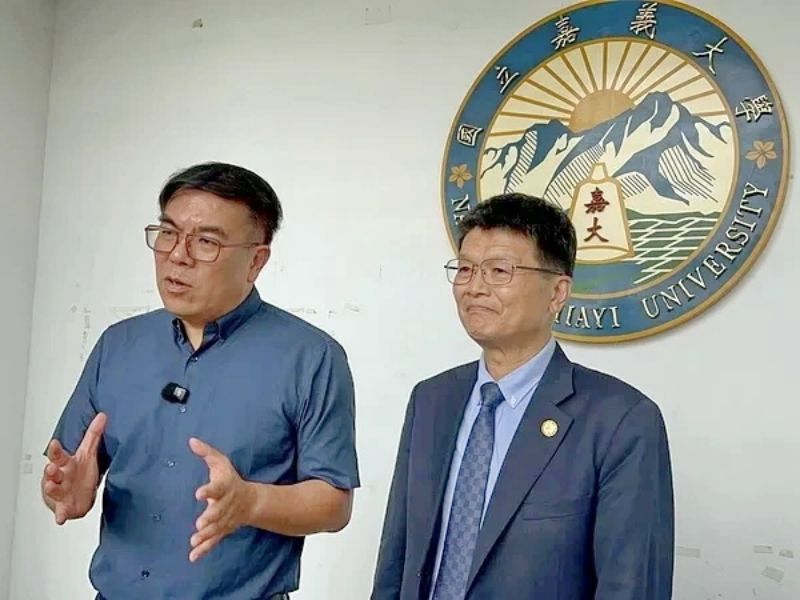
To proactively address the challenges of global climate change and rising temperatures, the Ministry of Environment (MOENV) and National Chiayi University (NCYU) jointly launched the nation’s first “National Land Green Canopy Climate Adaptation Plan and Wood Resource Circularity Promotion Briefing.” According to the latest monitoring and analysis by the Research Center for Environmental Changes, Academia Sinica, the Chiayi region ranks among the areas with the highest heat stress risk in Taiwan. Therefore, the MOENV selected NCYU as the first stop in a nationwide series of 50 public engagement events, aiming to strengthen cross-domain cooperation and mitigate urban heat hotspots through urban greening and tree planting, thereby setting a new benchmark for Taiwan’s national land resilience. During the briefing, MOENV Minister Peng Chi-Ming noted that trees and urban forests provide the most natural and cost-effective way to reduce urban temperatures. He further emphasized that climate adaptation is a large-scale, systemic undertaking that requires the active involvement of local governments, academia, businesses, and the public. NCYU President Han-Chien Lin stated that, as a leading academic institution in the region, NCYU has long been committed to advancing cross-domain sustainable development and green research. He noted that NCYU was honored to partner with the MOENV in undertaking this important national mission and would continue to leverage its expertise to foster meaningful dialogue between the government and the public, working together to build a more resilient and sustainable national land. In response to the increasingly severe urban heat island effect, the MOENV plans to submit the six-year “National Land Green Canopy Climate Adaptation Plan” to the Executive Yuan by the end of this year. The plan will serve as the core blueprint for future national land cooling, disaster risk reduction, and urban resilience initiatives. The inaugural briefing held at NCYU not only focused on local heat challenges but also explored how to build a long-term green circular ecosystem, with discussions centered on putting greening policies into practice so they become part of everyday life. One of the key highlights of the briefing was the introduction of three practical strategies designed to reshape conventional approaches to greening through systematic and digital measures: 1. Address the imbalance between planting and maintenance: Adopt the right tree, right place approach while establishing professional, long-term maintenance mechanisms to ensure the sustainable growth of green assets. 2. Establish a nationwide tree adoption platform: Advance the “One Person, One Tree” initiative by integrating modern digital management tools that enable citizens and businesses to participate in, track, and maintain adopted trees. 3. Align with the Resource Circulation Promotion Act: Establish a rigorous classification and utilization system for wood resources to help develop a comprehensive green resource circulation system for the reuse of green waste. The event concluded successfully, showcasing NCYU’s longstanding strengths in environmental protection, University Social Responsibility (USR), and sustainability research. The university will continue to play a key role in cross-sector communication and technical support by integrating academic expertise with social resources to help gradually implement the national land green canopy policy and create a cooler, healthier, and safer ecological living environment for future generations. Photo 1: MOENV launched the nation’s first briefing on the National Land Green Canopy Climate Adaptation Plan at NCYU. Photo 2: MOENV Minister Peng Chi-Ming announced that Chiayi will serve as the starting point for 50 public engagement events across Taiwan and that a six-year national plan will be submitted by the end of the year to enhance national land resilience.
2026.07.29
National Chiayi University (NCYU) Emerges as a Driving Force in Taiwan’s Biomedical Innovation
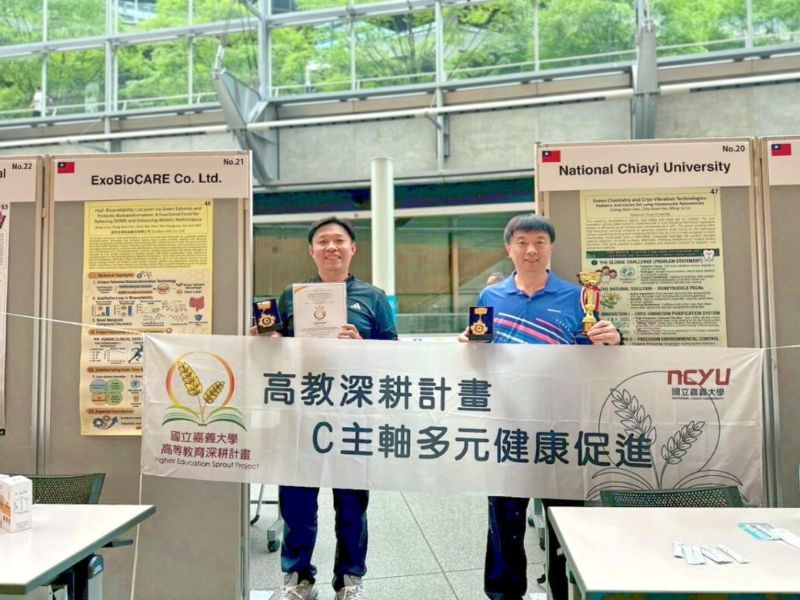
National Chiayi University (NCYU) is widely recognized for its rich agricultural heritage and its connection to the legendary KANO baseball team. Today, however, this century-old university in southern Taiwan is rapidly gaining international attention for a different reason: its groundbreaking research in smart agriculture, food biotechnology, medicinal plants, and plant-derived exosomes.
2026.07.08


